

Le Loop - supporting the William Wates Memorial Trust


My Updates
What I Carry on Long Rides
Thursday 8th Oct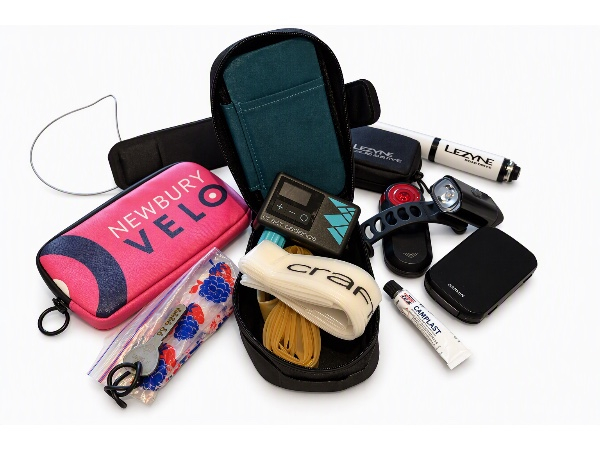
Ask anyone who rides long distances what they fear most, and it is rarely the hills. It is the small thing that stops you dead, fifty miles from home, with the light fading and the temperature dropping.
Next June I start the Le Loop Tour of Tours: 21 stages and 2,935km of historic Tour de France roads, with around 54,000m of climbing, in aid of the William Wates Memorial Trust. Long days in the saddle are now my normal. That makes what I carry, and what I have stopped carrying, a serious business.
Here is the kit that comes with me on every long ride, and the one change that has made the biggest difference of all.
The everyday essentials
Each item has earned its place over thousands of miles.
A torque tool kit. A bolt that works loose on a long descent is not a problem you want to fix by feel. A small torque kit means any roadside adjustment is done properly, not just tightly, which matters on carbon.
My Stolen Goat Newbury Velo Ride Pac. This keeps the important bits dry and in one place: my phone, house key, a credit card for an emergency taxi fare, a few electrolyte tabs for bottle refills, and my emergency contact details. If the worst happens, anyone who finds me knows who to call.
Garmin Edge 850. It handles route navigation and records every ride. On unfamiliar roads, deep into a long day, not having to think about the next turn saves more mental energy than you might expect. The data also feeds straight into my training.
Garmin rear light with radar. This gives me early warning of traffic approaching from behind, often well before I can hear it as I suffer from tinnitus. On quiet lanes it is reassuring. On busy roads, when you are tired, it is invaluable.
A small manual pump. My backup to the backup. More on why it rarely comes out below.
Two 750ml bottles. On long rides, hydration is not optional. With electrolyte tabs in the Ride Pac, every café stop or tap becomes a proper refill.
My Doma Pocket Musette. It folds away into a jersey pocket and comes out when I need extra carrying space, which on a long day is more often than you would think.
What I have given up: tubeless sealant
I wanted tubeless to work. The promise is lovely: a puncture seals itself and you ride on, barely noticing.
The reality, for me, was different. Too many times the sealant did not seal, or the bike got sprayed in white gunk. Then came the job every tubeless rider dreads: prising a tyre off at the roadside, getting a tube in, and doing it all with hands coated in mucky, sticky sealant. On a short ride that is an irritation. Two hours from home on a cold day, it is miserable, and it eats into the time and energy you need for the miles still ahead.
The butyl detour
So I went back to tubes, and tried butyl inner tubes with sealant inside them. It seemed like the best of both worlds. In practice, it made the tyres heavy and, for want of a better word, stodgy. The bike lost its life. Over a long day, that dead feeling adds up, and you feel every extra gram on every climb.
The answer: Craft Cadence TPU tubes
I now ride Craft Cadence TPU inner tubes, and I have not looked back.
They are light. The tyres feel lively again, the way a good bike should.
Aluminium valves. A small detail, but a robust one, I tried TPU before, but the plastic valve stems would snap, especially on cold rides..
Easy to change. No sealant, no mess. If I do flat, it is a clean, quick job at the roadside.
Repairable. I carry TPU patches and glue, just in case. A punctured tube is not the end of the tube, I can repair at the roadside, or back at home.
The spare tubes live in a neat little Craft Cadence saddle pack, alongside their clever e-pump. That e-pump is why my manual pump rarely sees daylight. When you are tired and cold, pressing a button beats a few hundred strokes of a mini pump every time, and you are back on the road with the right pressure in a fraction of the time.
2,000 miles, two punctures
I have now ridden over 2,000 miles training for the Tour of Tours on these tubes. In that time I have had two punctures.
Tyres play their part, of course, and I would not claim the tube does all the work. But the result is what matters: I have been able to concentrate on my training, not on my tyres. On a long ride, that peace of mind is worth a great deal.
The proof is in where they are going. Craft Cadence TPU tubes are now in my training bike and my winter workhorse, and they will be in my event bike for every one of the 21 stages of the Tour of Tours.
Thank you
My thanks to Craft Cadence for supplying my initial kit and for supporting my journey to the Tour of a lifetime. check out their great gear at https://craftcadence.com
Thanks also do Doma for the nifty little silicone Musette that lets me eat real food for fuel - check it out at https://domacycle.com
And also to Stolen Goat, who’s performavce shorts are some of the best I have worn - you’ll be coming to France with me too! Check our Stolen Goat at https://stolengoat.com They are designing mey event jersey for me
If you would like to follow the ride, or support the William Wates Memorial Trust, you can find my fundraising page here.
Test Negative, Ride Positive: A Week in Mallorca with the Club
Monday 5th Oct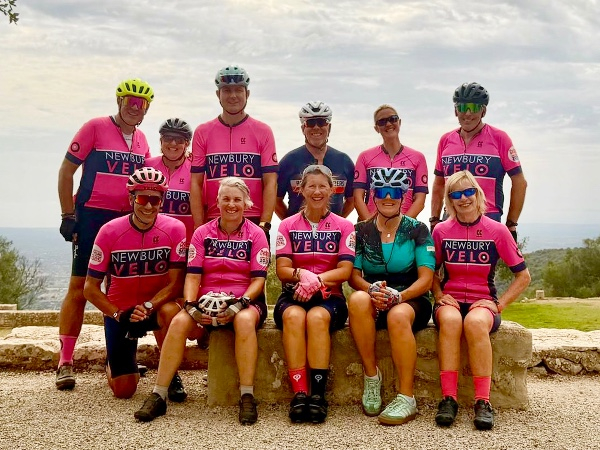
Most people start a cycling holiday with a coffee. I started mine at a pharmacy in Port de Pollença, holding a lateral flow test and trying not to imagine a week spent watching everyone else ride. A sore throat had kept me off the bike for several days, and by the time I landed, a day after the rest of the group, I felt terrible. Years of policing had taught me to plan for the worst case, because sometimes it actually happens.
This time it didn't. One line, not two. Feeling a little better than the day before, I trusted the old cyclists' rule (if it's all above the neck, you can ride) and joined an easy 70 km loop up through the mountains to the old monastery at Lluc, the group happy to take it steady. It was exactly what I needed.
That was the important thing about this week. It was predominantly a Newbury Velo social, with riders of mixed ability all riding together. Everyone took the climbs at their own pace, and we regrouped at the key junctions and the tops of the climbs before rolling on as one. It was what a club ride should be, just with warmer roads and more coffee.
The week
After that gentle start, the island showed us most of its faces. Tuesday was built around stops: coffee by the caves at Campanet, lunch in Pollença's old town (I sneaked off to ride up Puig de Maria above the town while everyone else chose somewhere to eat), and, for Richard Wilson and me, a last push out after lunch along the Formentor peninsula to the lighthouse at its tip. On Wednesday we left the mountains behind for the flat farmland in the middle of the island, a ride that took over nine hours door to door with barely five of them spent pedalling. The rest was coffee, lunch and waiting for each other at the tops of the climbs, which tells you most of what you need to know about the spirit of the week. Thursday was my queen stage, the name the Tour de France gives its hardest day, and I rode it alone: 166 km over the mountains by the Coll de Sóller and down the famous hairpins to Sa Calobra, then back up them faster than I ever have, with two food stops and a bottle refill along the way, one of them needing a dash to a cash machine first, after I realised cards weren't accepted. By Friday the bike was complaining a little. A rubber seal inside the rear hub had come loose and melted in the heat generated by the spinning wheel, gluing itself to the parts that are meant to spin freely, so the day began with the wheel in pieces and a warranty claim to add to the to-do list, and ended far more gently, with a group ride out across the plain for cake at Santa Maria.
Off the bike
Some of the best parts of the week happened off the bike. Riding together all day is one thing; sitting round a table together every evening is another. Over dinner the conversation drifted away from gearing and tyre pressures to the things there's often not much time for on a Sunday club run: families, work, where people had come from, what got them into cycling in the first place. A few personal stories were shared, and I've come home knowing clubmates a little better than I did before. That's what turns a good week of riding into a special one. The roads bring you here, but the company is what you remember.
Day six: recovery is the ride
I wrote this on the Saturday morning.
This morning I decided not to ride.
On paper it was an easy decision to question. For me the Orient route remains unridden, one of the few roads in Mallorca I have yet to experience. The weather is good, the bike is here, and my club colleagues are flying home today. A final solo ride would have been easy to justify.
Yet my body has been telling a different story.
It is not muscular fatigue. My legs are not heavy and I am not hobbling around the hotel feeling broken. Instead, the fatigue sits deeper. There is a sense of being drained rather than sore, a feeling that my nervous system has been working hard all week and is now asking for a pause. The Garmin metrics agree. HRV is down, Training Readiness has fallen to 1, and my training status has moved into "strained".
After more than 550 km since Monday, none of this should be surprising.
What strikes me is that this week's fatigue feels different from the tiredness I might feel after a hard local ride. It is the accumulated effect of day after day of riding, climbing, fuelling, recovering and doing it all again the following morning. The legs may still be willing, but the body as a whole is asking for recovery.
For someone preparing for the Tour of Tours, there is perhaps a lesson in this.
The challenge is not simply to keep pedalling. Most cyclists can do that. The challenge is to recognise when recovery becomes the smartest training choice. Continuing to ride today would not be about fitness. It would be about satisfying the desire to tick off another route and add another ride to the tally. Taking the day off is about respecting the work already done.
The miles are already in the bank.
The climbs are already in the legs.
The fitness gains will come not from one more ride to Orient, but from allowing my body time to absorb the training load of the last five days.
So instead of clipping in, I will catch the bus into Pollença later this morning. I'll wander through the town, drink coffee without watching the clock, eat well, and enjoy Mallorca from a different perspective, through my camera lens. The bike can stay where it is.
Orient will still be there another year.
Today, recovery is the ride.
The demons
I'd be lying if I said the week only brought good news. On the day off, the sums started running in my head. If 560 km and 7,400 m over five days left me needing a rest, how would I manage 3,000 km and 54,000 m over twenty-three days next summer? That morning, it felt almost out of reach. But that's what a week like this is for. It shows you the size of the gap, while there's still time to close it.
Day seven: the rest day pays off
Sunday, and the last day. I woke up feeling good, which is exactly what the day off was for. With the wheel still on borrowed time, I stayed local, riding loops close to the hotel so I was never too far away if it gave up, or caused more problems. A little over 100 km, and proof that one day off can do more than one more ride ever could.
The week in numbers
Six days of riding, 664 km and almost 8,300 m of climbing, a personal best up Sa Calobra, one melted hub weather seal, and a great deal of cake. Not bad for a week that began at a pharmacy counter. Mallorca, it turns out, was not the man flu disaster I'd feared it could be.
I had set out hoping for around 640 km, building day by day to one big ride and then easing off, and trusting the club's rides to give me that shape. They did, without me suggesting a single route or distance that needed to fit my plans. It just fell into place.
For the Tour of Tours, it was the first real taste of what riding day after day asks of you, and the first honest look at how far there still is to go. Both are worth having this far out.
Last orders
With the group already home, my final lunch in Mallorca was a table for one, and I finally found a restaurant serving alcohol-free beer on draught. It tasted like the end of a very good week.
Thank you to everyone at Newbury Velo who made the week what it was. If you'd like to support my ride for the William Wates Memorial Trust, you can donate here: https://fundraising.wwmt.org/fundraisers/simonbowden
Share
Men and Bikes With a Past… HMP Pentonville
Wednesday 23rd Sep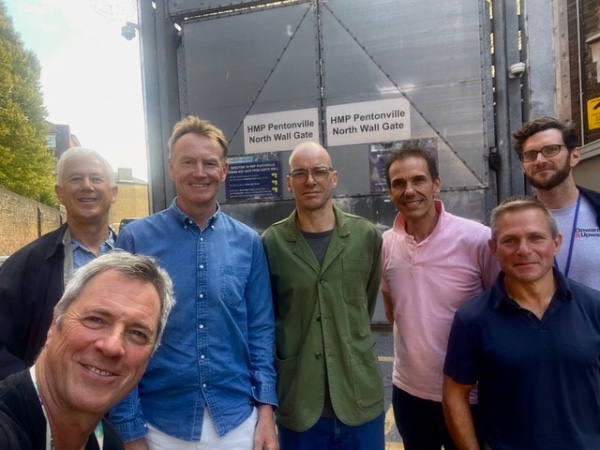
The 2027 Tour of Tours raises money for the William Wates Memorial Trust. As part of that, I get to visit some of the charities the Trust supports and see where the money Le Loop cyclists raise actually goes. I expected that to make the training feel more worthwhile. I didn't expect the first visit to stay with me the way it has.
Today I walked through the gates of HMP Pentonville on the Caledonian Road. It opened in 1842 as a model prison, built for a little over five hundred men with a cell each. It now holds many more than it was designed for, 1200 was quoted to me today. When the prison inspectors visited in the summer of 2025, they found six in ten men sharing a cell built for one. Most were locked up for more than twenty-two hours a day, and the inspectors called the place "dirty, noisy and chaotic." I had read some of the report before I went. Reading it is not the same as walking through it, with every door unlocked in front of you and locked again behind you.
Phones stay at the gate, so there are no photographs from inside. You'll have to take my word for what I experienced today.
I was there to see the XO Bikes workshop. XO stands for ex-offenders, and it's run by Onwards & Upwards, one of the charities the William Wates Memorial Trust supports. The idea is simple: train people while they are in prison as bike mechanics, give them a trade and support them into work, so the cycle of release and return to prison is broken. The main workshop and shop are on Lewisham High Street. The Pentonville workshop opened in 2024 with help from the City & Guilds Foundation, and it's aimed at men who are close enough to release that a trade waiting for them outside could make a real difference.
The change of atmosphere between the workshop and the wing was really easily felt, tension, noise and an ordered chaos in the wing is an understatement. In the workshop the men were working on rear mechs today, checking frames and talking gears with real pride and knowledge. Anyone at Newbury Velo who has spent a Sunday morning trying to index a rear mech knows it takes patience and a light touch. In here those qualities have value. The work is careful and exact, and you either get it right or you don't. The difference between the corridor of the wing and the workbench was impossible to miss.
In four weeks these men earn a recognised mechanics qualification. The bikes they learn on are donated, stripped down, rebuilt and sold, and the money trains the next mechanic. So one man's work helps pay for the next man's chance. XO Bikes' director, Stef Jones, describes the mission as: "Take men and bikes with a past, and give them a future." Having now seen it in person, I don't think that's just a slogan. On release, the men can carry on training at the Lewisham workshop, with mentoring, employment coaching and introductions to employers who might give them their first proper job.
That first job matters more than most of us realise. Ministry of Justice figures show that around four in ten adults leaving prison reoffend within a year. For those who served short sentences, it's more than six in ten. Behind each of those numbers is a man who walked out of the gate with nowhere to go and nothing to do. A qualification, a reference and someone who expects you to turn up for work can change that.
What humbled me most was how much I take for granted. Most of us at the club learned to fix a puncture from a parent, a friend or a patient club mate at the side of the road, or maybe at one of our club bike maintenance sessions. Someone showed us, and then someone else showed us something more. Many of the men I met today have never had that, and many cannot read or write either. For us the bike means fitness, friendship and cake at the café stop. For them it might be the first thing they've been properly trained to do, the first certificate with their name on it, and the first line on a CV that an employer will read without looking away.
I went into Pentonville thinking I understood what the fundraising was for. I came out knowing who it's for. There will be cold, wet mornings this winter when the training plan on its own isn't enough to get me out of the door. I suspect I'll think about that workshop, and those men working on rear mechs, getting it right and giving themselves a better future.
If you'd like to follow the rest of my 2027 Tour of Tours journey, keep an eye on this blog, and please make a donation to the trust:
Garmin Connect: Read the Trend, Not the Day
Thursday 17th Sep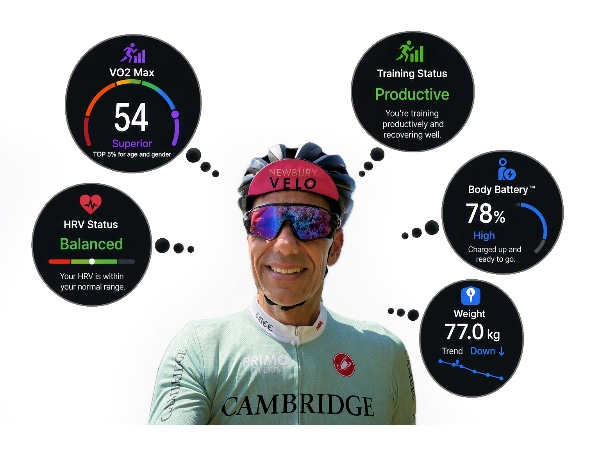
Today, a little about how I use my Garmin setup to train, I use a Garmin bike computer for the rides along with a heart rate strap, a watch for the gym sessions, and swims, and wear a Cirqa all day an night on my upper arm 24/7, so the data is complete. Then, I use Garmin Connect to inform my training plan day to day. I've got a coached programme to follow, but I don't just execute it blind: I check the metrics each morning and adapt the session in front of me depending on what my status is actually telling me, pushing when the data backs up how I feel, easing off when it doesn't.
Your Garmin dashboard throws a lot at you. Training Status, Readiness, Body Battery, HRV, VO2 Max, Recovery Time. Used right, it's a genuinely useful coaching layer. Used wrong, it's just a source of daily anxiety. Here's the short version of each metric, and how to actually use it.
Training Load. Your rolling seven-day training stress, built from heart rate and EPOC. Watch the shape over weeks, not the daily bar. A steady climb is a normal build. A sudden spike after a flat patch is usually the thing that produces a niggle five days later.
Training Status. Tells you if recent training is building fitness, holding it, or letting it slip (Productive, Maintaining, Peaking, Overreaching, Detraining). It's slow and trend-based by design. Overreaching for a few days is just a hard block. Overreaching for three weeks is your cue to back off before your body forces the issue.
Training Readiness & Recovery Time. Recovery Time is simple: hours until you're fit for another hard session. Readiness folds that in with sleep, HRV, stress and recent load into one daily score. Treat it as a second opinion, not a verdict. Low score, feel rough: rest. Low score, feel great: trust yourself sometimes.
HRV Status. One bad night means nothing, that's why it's shown as a rolling status, not a single reading. A status stuck on Unbalanced for a week is the real signal, something's accumulating.
Body Battery. Your energy tank for the day. Useful as a same-day gut feeling check before stacking a hard session on a battery that's already at 20%. Not worth obsessing over hourly.
VO2 Max. Moves slowly and plateaus. Don't mistake a flat VO2 Max for stalled fitness, your FTP and durability can still be climbing underneath it.
The rule that covers all of it: any single reading is just white noise. The trend over two to four weeks is the signal. Let the direction of travel make training decisions, not one bad night's HRV.
And as for weight: Same Rule, track it over time for the bigger Payoff, and if losing weight for a specific event is important, slwly and steady is the key. I am losing a few KG, but I am not dieting, high protein, natural fast absorbing cards when I need them, and slow release when that fits the day, I’m still on big healthy breakfasts, so slrimping the fuel for the day.
Weekly weigh-ins feel sensible but they can misleed. Sodium, glycogen-bound water, hydration, hormones and last night's dinner can shift the scale one or two kilos in a day, with zero fat or muscle actually changing. Land on a high day or a low day and you'll draw the wrong conclusion.
Weigh daily instead, same conditions each time, I go for first thing in the morning, and I also weight before and post ride, to check that I have taken on enough fluid during the ride itself, under hydrating on a 100 mile zone 2 will cost you for a few days adterwards. Track the rolling average (seven to fourteen days) rather than any single number. The spikes cancels out and the real trend shows up in a week or two instead of a month. A bad-looking morning stops meaning anything on its own, because you're reading the line, not the single dot.
One reading is almost meaningless. The trend is where your progress sits. This applies to your HRV, your Readiness score, and your bathroom scale alike.
Sources:
Training Status | Garmin Technology
Garmin Training Features: Status, Load, Effect, Readiness and Recovery Time
Week Five: 1,000 Miles Down, and Making Friends With Zone 2
Friday 4th Sep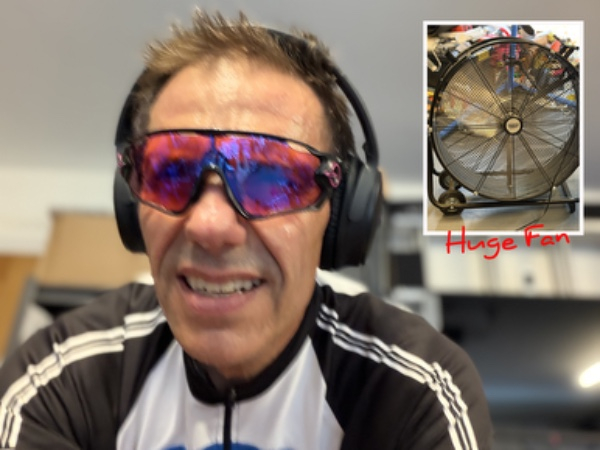
It's Friday of week five, and the numbers have ticked past two thresholds I'd been half-watching: over 1,000 miles ridden, and over 12,000 metres climbed. Written down like that it looks like something. Ridden one session at a time, it just felt like another day on the bike.
Today's session was two hours in Zone 2, and since that phrase crops up a lot in a training plan without explaining itself, it's worth explaining for those that are not familiar, it's also the best excuse I have for why I spent two hours this morning looking like I was about to go skiing indoors!
So what actually is Zone 2?
Think of your body as having two different engines for producing energy: a fat-burning one and a sugar-burning one. The sugar-burning engine is powerful but has a small tank, it's what kicks in when you sprint for a bus or grind up a short, steep hill. The fat-burning engine is the opposite: much less punchy, but the tank is enormous, because even a lean cyclist (I’ll be one at some point soon) is carrying tens of thousands of calories of fat around with them. Zone 2 is the effort level — roughly 60–70% of your maximum heart rate, where you're leaning almost entirely on that second engine.
The tell-tale sign is that you can hold a full conversation while doing it. Not gasped sentences between breaths. An actual chat. If you can't talk in full sentences, you've drifted out of it and into the sugar-burning zone, which feels more like "training" but isn't what today's session was for.
Here's the part that makes it interesting rather than just easy: riding, repeatedly, over months, is what teaches the body to get better at using fat as fuel in the first place. It grows more of the tiny cellular power stations (mitochondria, if you want the technical word) inside your muscles, and more of the blood vessels that feed them. None of that happens in a single ride. It's closer to slow-cooking than searing… nothing dramatic happened in my pan today, but the flavour that builds up over hours is the whole point. Ride 21 stages back to back and the day that matters most isn't the one where you went fastest in April, it's the aerobic base that lets you get out of bed on day 15 to do it all again.
Today's two hours, on the Wattbike
Other commitments meant the road wasn't an option today, so this one was done indoors on the Wattbike, which brings me to the getup, because I imagine it raises a question or two if you'd walked past my garage this morning.
Yes, those are sunglasses, worn indoors, at 11am, going nowhere. That's not a fashion choice, it's to stop my eyes drying out and getting irritated by the enormous fan I point at myself to stay cool for two hours of steady effort with none of the natural airflow you get outside. And the headphones are doing double duty: music to keep two hours of the same gear and the same wattage from feeling like four hours, and enough noise cancelling to drown out said enormous fan, which up close sounds less like a gentle breeze and more like a light aircraft preparing for takeoff.
The bit that's hard to say out loud
Twenty-one stages of Tour de France history, back to back, in 2027, still feels a long way off from where I'm sitting today, if you put me on the start line tomorrow, I couldn't do it. Not close. That gap between where the fitness is now and where it needs to be is exactly what the next ten months are for. Week five, two hours, Zone 2, sunglasses on indoors… not glamorous, but it's the slow-cooked kind of progress that the whole thing is built on.
Share
Fuelling On The Bike: Why I Said No To Gels
Tuesday 25th Aug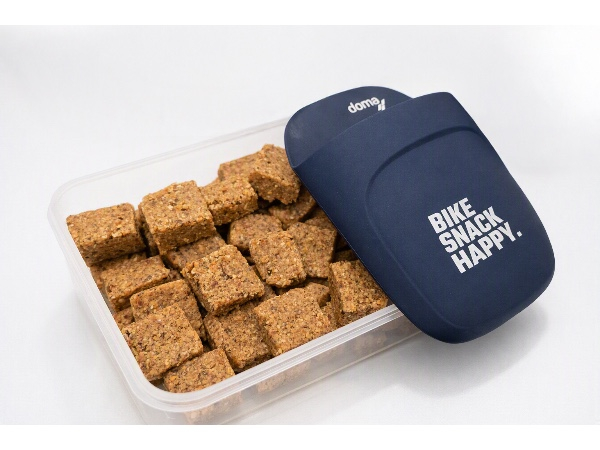
This week's post is about fuel, specifically, what's going in the jersey pockets instead of the usual couple of gels.
I did the sums a while ago and it stopped me in my tracks. If I fuel the way most people fuel a big endurance year, I'd get through something like 1,200 gels, and wrappers between now and next June. Twelve hundred little foil packets, torn open with my teeth on the bike, dropped in a bin if I'm lucky and if not stuffed back in a pocket to get messy. That's before the Tour of Tours itself even starts. It's an insane amount of waste for a challenge that's meant to mean something, and my stomach was never a fan of the goo in the first place. So I made the decision: real food, no gels.
Easier said than done… The first attempt was Turkish delight, the proper stuff, not the chocolate-covered kind, which travels well, tastes like an actual treat at hour three, and doesn't turn my gut inside out. It worked, right up until I started worrying about what a number of daily sugar-dusted cubes was doing to my teeth over an eleven-month build. Great fuel, questionable dentistry!
So I've moved on to making my own bars: oats and dates, with chia seeds added for a bit of texture and a slow-release carb bonus alongside the natural sugars from the dates. I blend it all down, press it into a sushi mould which turns out to make a very tidy mini-flapjack sized bar, and cut it into bite-sized pieces. No wrappers, no faff, and it actually tastes like something I'd choose to eat rather than something I'm forcing down at mile 100.
My oat, date and chia bars, if anyone wants to try them:
15 pitted Medjool dates
100g rolled oats
2 tbsp natural peanut butter (crunchy is better I think)
1–2 tbsp chia seeds
1 tbsp water (if needed)
Pinch of sea salt
Blend the dates in a food processor until they form a sticky paste, add the peanut butter and salt and pulse again, then pour in the oats and chia seeds and pulse until it all binds together. Press firmly into a mould or lined tray, chill for half an hour, then cut into bars. Ten minutes of effort, and they'll sit happily in a jersey pocket for hours.
None of this would work half as well without a proper way of carrying it. Huge thanks to Mike Preston at Doma Cycle in Canada, who kindly supplied me with a set of their pocket musettes — small, washable pouches that slip neatly into a jersey pocket. I can load a bar or a handful of Turkish delight in before I leave and pull out exactly what I need on the move, instead of fighting a sticky mess out of a plastic bag one-handed at 25kph. It's a small piece of kit that's solved a genuinely annoying problem.
The upshot: a four-hour ride is now easy to fuel, entirely wrapper-free, and my teeth are considerably less worried about me than they were a few months ago.
The build up has started already
Friday 7th Aug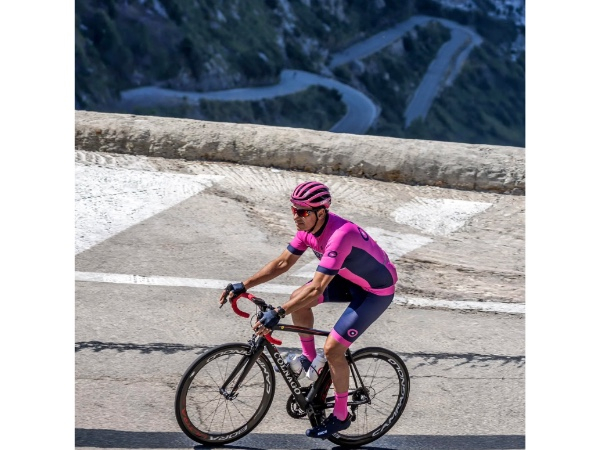
Well, I officially entered the 2027 Tour of Tours with Le Loop - a three‑week endurance challenge built from some of the most iconic and demanding stages ever ridden in Tour de France history. It’s a huge milestone after a long couple of years: a High Tibial Osteotomy in 2023, plate removal in March this year, and a full Achilles rupture in June 2025. That rupture was the injury that stopped me riding Le Loop last year, when I’d hoped to take it on alongside Martin Colston, a fellow Newbury Velo Club member. Martin has just finished his Le Loop, and watching him complete it is both inspiring and terrifying as I start my own journey toward next July.
There’s still some rehab to finish. My knee surgery is now pretty much settled, and my Achilles is in the latter stages of healing, strong, stable, and finally behaving itself. On 23rd July I’m having a steroid injection to deal with a hip bursitis issue, which should clear the last remaining niggle before structured training begins.
From 1st August, the real work started: building durability, consistency and confidence over the next eleven months. This blog will follow the journey from the first training block all the way to the start line next July, and hopefully through the Tour itself, if time and sleep allow…! find our more at www.simonbowden.uk
ShareThank you to my Sponsors

£500
Minim Healthcare
£250
Narpo - Berskhire
NARPO Berkshire is proud to support the William Wates Memorial Trust. As retired police officers, we know how vital early intervention is in helping vulnerable young people build positive futures. WWMT funds projects that give young people purpose, structure and support at the moments they need it most. Their work reflects the values we carried throughout our policing careers, and we are pleased to contribute to this challenge and the charity it supports.
£150
Owain Harrison - The Notthview
Herculean challenge, best of luck Simon.
£109.25
Jennifer Aldred
I really admire your energy and ambition - go big or go home! Best of luck on your journey.
£109.25
Duncan Coe
Good luck Simon, not that you'll need it, you'll monster this 😄💪💪
£109.25
Derek
Good luck, you are going to get a very sore bottom!
£107
James & Sarah Bowden
Smash it my big bro. Do us all proud matey....Mum & Dad will be looking down with support I'm sure. xxx
£83.75
Doma Cycle
£82.40
Rcvry Injury Clinic
Hey Simon! All the best luck from RCVRY Injury Clinic Team!
£55.88
Michael Vince
£55.88
Emily Nicol
A cause very close to my heart and work, I wish you all the best you’re amazing!
£55.88
M James L Stratton
£55.88
Dave & Ruth Aitken
Amazing effort Simon and great cause. Best of luck! Dave & Ruth
£55.88
Rob Whittaker
Godd luck, Simon, have fun with it! Rob
£55.88
Caroline Sharman-mendoza
What an amazing challenge! Good luck & enjoy! Caroline
£55.88
Fragkiskos Vellis
Proud to be a supporter for this one! I will definitely follow along and I will secretly hope that I can do something similar, myself, soon! All the best!
£54.75
Paul Sorensen
Best of luck mate.
£54.75
Fiona & Tys
What an amazing fete of endurance in aid of a great charity. We don’t have any doubt you’ll smash it!!
£54.75
Melvyn Kendall
£50
Gareth Davies
Good luck Simon, huge undertaking, looking forward to following your progress
£50
Max Lock
Good Luck!
£50
Siri Moorby
£50
Adrian Sealy
Good luck Simon
£40
Discount
Discounted Car MOT from One Stop Service Centre, courtesy of Pete Jung, Many thanks - Discount applied to fundraising.
£33.15
Graham And Madeline Jones
Thats a tough one Simon, it’s likely to hurt and admire you determination- go well and stay safe Graham and Madeline.
£30
Jon G
Go for it!!
£28.44
Charlie
keep at it champ
£28.44
Kevin H
£28
Lesley Jesshop
What a challenge you are taking on. Well done e and good luck.
£28
Kevin Fitzpatrick
Good luck mate!
£28
Michael Clare
Wow. Best wishes and good luck with this challenge. Great what you are doing.
£25
Sharon
Respect Simon & my best wishes for a safe completion ❤️
£25
Peter Carter
£25
Anonymous
Good Luck Simon, ride safely.
£25
Real Belgian Fries
£25
Lizzie, Dan & Amelie
Good luck Simon! We know you will smash this challenge, and what a great cause to raise money for.
£22.80
David Gilbert
Good luck Simon
£20
Mary Winks
What a fantastic challenge. Best of luck Simon and look forward to following your journey on Strava!
£17.10
Sheena Evans
Good Luck
£12.25
Anonymous
Also currently got a hip problem that is preventing me from my comparatively short rides, but very best wishes for your big challenge.
£12.25
Charlie Parker
You have got this. My £10 is intended to be added to. Every monthly update. Keep riding.
£11.55
Mike Mahon
£10
Annie Inglis
All the best for your challenge
£10
Emma Garside
Good luck Simon
£10
Robert Atkins
£6.56
Sandir Feakins
Good luck and enjoy!


Minim Healthcare is proud to support Simon on his Tour of Tours. Riding 21 stages of Tour de France history is a remarkable challenge, and we're delighted to contribute to the cause. Good luck, Simon! We'll be cheering you on every mile of the way.